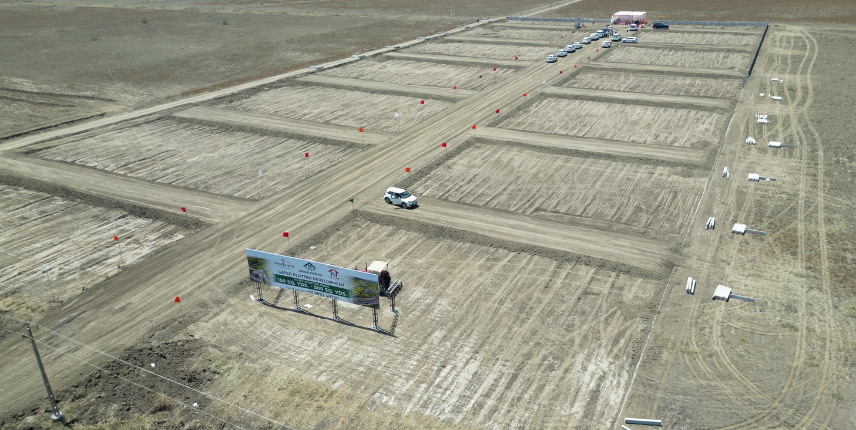

This is one of the most common questions people ask when they first explore Dholera.
But there is no responsible answer that simply says:
“Buy in this one location.”
Dholera is a large, phased development region, and different locations may suit different investment objectives.
The smarter question is:
What makes one Dholera location stronger than another?
The answer usually comes down to a combination of:
Infrastructure + Connectivity + Economic Activity + Planning Context + Documentation + Price + Time Horizon
That is how a Dholera investment location should be evaluated.
Don’t Start With the Cheapest Plot
A common mistake is to begin with:
“What is the cheapest rate available?”
Cheap land is not automatically good land.
A low price may simply mean:
- weaker connectivity;
- greater distance from economic activity;
- limited existing infrastructure;
- different planning context;
- longer development horizon; or
- greater uncertainty.
Instead of asking only about price, ask:
Why should demand come to this location in the future?
That one question can completely change the way you evaluate Dholera.
1. Start With Infrastructure
Infrastructure is one of the strongest foundations of urban growth.
The source book repeatedly connects Dholera’s long-term real-estate potential with:
- roads;
- utilities;
- expressway connectivity;
- airport infrastructure;
- industrial development;
- digital infrastructure; and
- supporting urban systems.
The book also notes that long-term real-estate value is generally influenced more by fundamentals such as employment growth, infrastructure development, business activity and economic expansion than by short-term sentiment.
So before buying a plot, understand:
What infrastructure exists today?
and
What infrastructure is only planned for the future?
That distinction matters.
2. Understand the Property’s Connectivity
A plot may be described as being “near Dholera,” but that description alone tells you very little.
Connectivity should be evaluated at several levels.
Regional Connectivity
How does the location connect with Ahmedabad and the broader region?
Dholera Connectivity
How does it relate to Dholera’s internal road network and development areas?
Property-Level Connectivity
What actual road gives access to the property?
This third point is often overlooked.
A plot may be close to a major corridor on a map but still have weaker practical access.
3. Look at Economic Activity, Not Just Maps
Real estate becomes more valuable over time when people and businesses actually need space.
The book explains the sequence clearly:
Infrastructure attracts investment
↓
Investment creates jobs
↓
Jobs attract people
↓
People create demand
↓
Demand drives development
This is the real-estate story investors should watch in Dholera.
The question is not only:
“What is planned around this land?”
The stronger question is:
“What economic activity could eventually create demand around this land?”
4. Understand the Type of Future Demand
Different economic activities create different kinds of property demand.
For example:
Industrial Growth
Can create demand for manufacturing facilities, logistics, warehousing and supplier businesses.
Employment Growth
Can eventually support residential demand.
Business Growth
Can create office, retail and commercial demand.
Logistics Activity
Can create demand for warehouses and distribution infrastructure.
Population Growth
Can support schools, hospitals, hospitality, retail and community services.
The book identifies Dholera’s potential long-term demand drivers as industrial growth, manufacturing expansion, semiconductor ecosystems, technology investment, population growth and business development.
That means investors should think about the type of demand a location may eventually attract.
5. Understand Your Investment Horizon
Dholera is not the same kind of investment as buying an apartment in a mature city.
It is an evolving development story.
That means time horizon matters.
A buyer looking for a very short holding period may evaluate Dholera very differently from someone looking at a longer horizon.
Before buying, decide whether your objective is:
- long-term land holding;
- future residential use;
- commercial opportunity;
- industrial use;
- business expansion; or
- portfolio diversification.
The right location can depend heavily on the answer.
6. Separate Ground Reality From Future Potential
For any Dholera location, divide your analysis into three buckets:
| Category | What to Check |
|---|---|
| Exists Today | Roads, access, utilities, nearby development |
| Under Development | Infrastructure currently being executed |
| Future Plan | Proposed roads, zones and developments |
This prevents a very common investment mistake:
Treating everything shown on a future development map as if it already exists.
A future project can still be meaningful.
But it should be valued as a future assumption, not current infrastructure.
7. Understand the Larger Economic Story
Dholera’s property story is connected to a much larger economic development plan.
The source book identifies several long-term growth drivers, including:
- manufacturing growth;
- semiconductor expansion;
- digital transformation;
- renewable-energy development;
- urbanisation; and
- global supply-chain diversification.
These themes extend beyond individual real-estate projects.
That matters because sustainable property demand usually requires a broader economy to support it.
Why Industrial Development Matters to Land Investors
One of the strongest themes in Dholera is industrial development.
The city is being planned around sectors such as:
- manufacturing;
- electronics;
- semiconductors;
- engineering;
- renewable energy;
- logistics; and
- technology.
Industrial growth can create a multiplier effect.
A large company arrives.
Then suppliers arrive.
Then service businesses.
Then employees.
Then housing.
Then retail.
Then healthcare, education, hospitality and entertainment.
This is why investors should track industry announcements and actual execution, not only property prices.
Employment Is One of the Most Important Signals
One of the best long-term indicators of urban property demand is employment.
Why?
Because jobs create reasons for people to move.
People who move need:
- homes;
- transport;
- schools;
- healthcare;
- food;
- entertainment;
- banking;
- professional services; and
- retail.
The book makes this relationship explicit: residential growth is ultimately linked to employment and economic opportunity.
So when studying Dholera, keep asking:
Where will jobs actually be created?
That can be more meaningful than simply asking where prices have increased recently.
Location vs Price: Which Matters More?
Imagine two plots.
Plot A
Lower price, but far from current infrastructure and dependent heavily on future development.
Plot B
Higher price, but stronger access to roads, economic activity and visible infrastructure.
Which is better?
There is no universal answer.
It depends on:
- price difference;
- investment horizon;
- documentation;
- infrastructure;
- development risk; and
- your objective.
But comparing only the price per square yard would miss most of the investment story.
What About Land Near the Expressway?
Expressway proximity can be important because connectivity supports economic activity.
The Ahmedabad–Dholera Expressway strengthens regional accessibility and can improve logistics and business mobility.
But investors should still ask:
- How far is the nearest usable access point?
- What is the local road connectivity?
- What lies between the land and the expressway?
- What is the surrounding planning context?
- What economic activity exists nearby?
Near a highway and well connected to a highway are not always the same thing.
What About Land Near the Airport?
Airport-led development can support:
- business travel;
- hospitality;
- logistics;
- commercial activity; and
- supporting services.
But again, distance alone should not decide an investment.
Airport-related opportunity should be evaluated together with:
- access roads;
- applicable planning restrictions;
- surrounding land use;
- industrial development;
- future demand; and
- legal due diligence.
Infrastructure creates possibilities.
It does not make every nearby land parcel equally attractive.
What About the Activation Area?
The Activation Area is especially important because it represents Dholera’s first major physical development phase.
The book records approximately 22.5 sq km of Activation Area with around 72 km of roads and utility networks, along with major water, sewage and effluent-treatment infrastructure. Dholera_Book_Final_Preview
For investors, its significance lies in the fact that it provides visible evidence of infrastructure development.
But that does not mean every property closest to it is automatically the best investment.
Price, land status, connectivity and long-term demand still matter.
8 Questions to Ask Before You Select a Dholera Location
Before paying a token amount, ask:
- Where exactly is the land located?
- What is the current access road?
- What infrastructure exists nearby today?
- What infrastructure is under construction?
- What future development is being assumed?
- What economic activity may create demand here?
- What are the ownership and title documents?
- Does the price make sense relative to the location and risk?
If a seller cannot clearly answer these questions, more due diligence is needed.
A Simple Dholera Location Scorecard
Use this before comparing properties:
| Factor | What to Evaluate |
|---|---|
| Connectivity | Roads, regional access, practical approach |
| Infrastructure | Existing vs future |
| Economic Activity | Industries, businesses, employment |
| Planning Context | Surrounding development and land use |
| Documentation | Title and relevant records |
| Demand Potential | Why people/businesses may need this location |
| Price | Relative value, not just cheapest rate |
| Time Horizon | How long you are prepared to hold |
A strong decision generally comes from the combination, not one single factor.
What Actually Drives Long-Term Real Estate Value?
The source book identifies several important fundamentals:
Employment Growth
Population Growth
Infrastructure Development
Business Activity
Economic Expansion
These are stronger long-term indicators than short-term market excitement.
The book’s central point is that Dholera’s real-estate opportunity should be viewed as part of the region’s wider economic transformation—not as land speculation alone.
The Most Important Question Before Investing
Don’t ask:
“Which plot will double fastest?”
Ask:
“What will create genuine demand for this location over time?”
That shift takes the conversation from speculation to fundamentals.
And for Dholera, fundamentals are exactly what investors should be studying.
Let TNT Infra Compare the Location With You
At Dholeraa.com by TNT Infra, we can help you understand a property beyond its brochure.
We can look at:
Exact Location
→ Connectivity
→ Nearby Infrastructure
→ Development Context
→ Economic Drivers
→ Documentation
→ Price Comparison
→ Investment Objective